Sticker Designer Sketchbook and Planner: A Practical Tool for Creative Workflow
For creators, entrepreneurs, and hobbyists, the gap between a fleeting idea and a finished product is often where momentum is lost. The Sticker Designer Sketchbook and Planner serves as a dedicated bridge in this creative process, functioning as both a structured workspace and a flexible canvas. Unlike generic notebooks, this resource is engineered specifically for the unique demands of sticker design, lettering, and visual planning. It integrates seamlessly into broader production workflows, offering a tangible space to iterate before committing to digital vectors or final print runs.
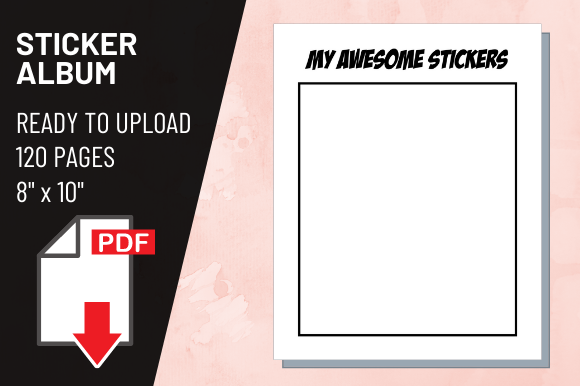
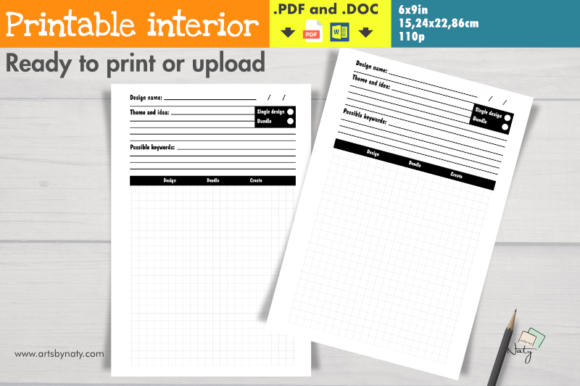
This tool is not merely a collection of blank pages; it is a system designed to organize creative output. With dimensions of 6x9 inches (15.24 x 22.86 cm) and 110 pages, it provides a portable yet substantial format that fits into daily routines. Whether you are a freelance illustrator managing multiple client briefs, a small business owner prototyping new merchandise, or an educator creating visual aids, this sketchbook offers a standardized environment for development. The availability of both PDF and DOC file formats ensures that users can adapt the resource to their specific technical preferences, whether they prefer printing physical copies for hand-drawing or editing digitally for hybrid workflows.
Integrating the Sketchbook into Pre-Production Phases
Effective sticker design begins long before opening graphic design software. The pre-production phase is critical for establishing concepts, testing compositions, and refining typography without the pressure of pixel-perfect execution. The Sticker Designer Sketchbook and Planner excels in this exploratory stage by providing a low-stakes environment for rapid iteration.
During the brainstorming phase, use the sketchbook to map out thematic collections rather than isolated images. For sellers on platforms like Etsy or Redbubble, cohesion drives sales. Dedicate specific sections of the planner to outline collection themes, color palettes, and target demographics. This strategic planning prevents the common pitfall of designing disjointed assets that fail to convert as a bundle. By documenting these decisions early, you create a reference point that streamlines later digital execution.
Typography and lettering require distinct spatial considerations compared to standard illustration. The structured layout supports practicing hand-lettering styles that will eventually be digitized. Because the final output for stickers often requires clean lines and scalable forms, using this sketchbook to refine stroke weight and spacing ensures that the transition to vector software is smoother. You can identify potential legibility issues at the sketch stage, saving hours of rework in Adobe Illustrator or Procreate.
Workflow Compatibility and Digital Integration
A major advantage of this resource is its dual-format accessibility. The inclusion of an editable DOC file allows professionals to customize the interior structure before printing. This interoperability is essential for users who need to align the sketchbook with existing brand guidelines or project management systems.
- Customizable Ownership Pages: The ability to edit the "This notebook belongs to" page transforms a generic template into branded intellectual property. For agencies or teams, this page can include project codes, client names, or confidentiality notices, ensuring physical assets remain organized and secure.
- Copyright Management: The editable copyright page is a vital feature for commercial creators. Before printing, you can insert your specific licensing terms, creation dates, or contact information. This establishes provenance immediately, which is crucial for protecting original designs in a competitive marketplace.
- Hybrid Analog-Digital Workflows: Many designers scan their hand-drawn sketches to use as base layers in digital software. The 6x9 size is optimized for standard scanners and mobile scanning apps. The lack of watermarks ensures that scanned pages are clean and ready for tracing or texture extraction without requiring extensive cleanup in post-processing.
For those who prefer a fully digital workflow, the PDF version functions effectively on tablet devices. When imported into note-taking apps, it retains its structure while allowing for infinite undo/redo capabilities. This flexibility means the Sticker Designer Sketchbook and Planner adapts to your preferred medium rather than forcing a change in habits.
Execution and Active Design Implementation
Once concepts are validated, the sketchbook transitions into an active production tool. The 110-page count provides sufficient volume for sustained projects without becoming unwieldy. In practical application, this length supports batching—a productivity method where similar tasks are grouped to reduce cognitive load.
Consider organizing the sketchbook by production stage rather than chronological order. Reserve the first twenty pages for rough thumbnails and mind maps. Use the middle section for refined drafts and technical specifications, such as bleed lines, cut paths, and color codes. Dedicate the final pages to quality control checklists and production notes. This segmentation turns the sketchbook into a comprehensive project dossier that travels with the design from inception to manufacture.
For educators and content creators, the planner aspect facilitates curriculum or content scheduling. Sticker design is often tied to seasonal trends, holidays, or educational milestones. Using the planner to map out release schedules alongside design sketches ensures that creative output aligns with market demand or teaching objectives. This synchronization reduces last-minute rushes and improves the overall quality of the final product.
Maintaining Quality Control and Consistency
Consistency is the hallmark of professional design. The Sticker Designer Sketchbook and Planner aids in maintaining visual standards across large batches of work. By keeping all related sketches in a single, unified location, designers can easily flip back through previous pages to ensure line weights, character proportions, and stylistic choices remain uniform.
The absence of watermarks is a significant quality factor. Many free or low-cost templates include intrusive branding that interferes with the creative process or necessitates removal. This product’s clean design respects the user's workflow, ensuring that every millimeter of the page is available for productive work. For professionals presenting sketches to clients for approval, a watermark-free document looks polished and authoritative.
When preparing files for print-on-demand services or professional manufacturers, accurate sizing is non-negotiable. The 6x9 inch format corresponds to standard industry sizes, making it easier to visualize scale. However, users should always verify specific printer requirements. The sketchbook serves as a reliable analog proof; if a design feels cluttered or unbalanced at this physical size, it will likely have issues when scaled down to a two-inch vinyl decal. Trusting the physical feedback of the sketchbook helps prevent costly printing errors.
Post-Project Archiving and Knowledge Retention
The value of a dedicated sketchbook extends beyond the completion of a single project. It serves as an archive of creative problem-solving and skill development. For freelancers and business owners, reviewing past sketchbooks can reveal patterns in efficiency, highlight recurring design challenges, or inspire future collections based on unused concepts.
The editable nature of the DOC file allows for versioning. As your workflow evolves, you can update the internal templates, add new checklist criteria, or modify the copyright information to reflect changes in your business structure. This makes the Sticker Designer Sketchbook and Planner a living document that grows alongside your practice. Rather than purchasing a new generic notebook for every project, you maintain a consistent system that reduces setup time and mental friction.
For teams and collaborators, standardized sketchbooks improve communication. When everyone uses the same format for ideation and planning, reviewing work becomes faster and more objective. The clear structure eliminates ambiguity about where to find specific information, such as color references or revision notes. This organizational clarity is particularly valuable in remote work environments where physical handoffs are impossible and digital clarity is paramount.
Practical Considerations for Long-Term Use
To maximize the utility of this resource, consider the physical production quality if printing at home or via a service. The 6x9 size is economical to print and bind, making it feasible to produce multiple copies for different purposes—one for messy brainstorming, another for client-facing presentations, and a digital master for archival. Selecting appropriate paper weight is also important; if using markers or heavy ink for sticker prototypes, opt for heavier stock to prevent bleed-through, preserving the integrity of subsequent pages.
Digital users should leverage layering features in their PDF annotation apps. Keep the base template locked on a background layer to prevent accidental shifts while sketching on top. Create separate layers for different types of annotations (e.g., structural lines vs. color notes) to maintain organization. This digital discipline mirrors the structured approach encouraged by the planner itself.
Ultimately, the Sticker Designer Sketchbook and Planner is a tool for intentional creation. It moves the designer away from reactive, scattered efforts toward a systematic approach that values preparation, consistency, and professional presentation. By embedding this resource into your regular workflow, you create a sustainable foundation for creative output that withstands the pressures of deadlines and market demands. Whether used for personal enjoyment or commercial enterprise, it provides the necessary structure to turn abstract ideas into tangible, high-quality assets.