KDP Interior Sticker Album: A Practical Guide to 8x10 No-Bleed Layouts
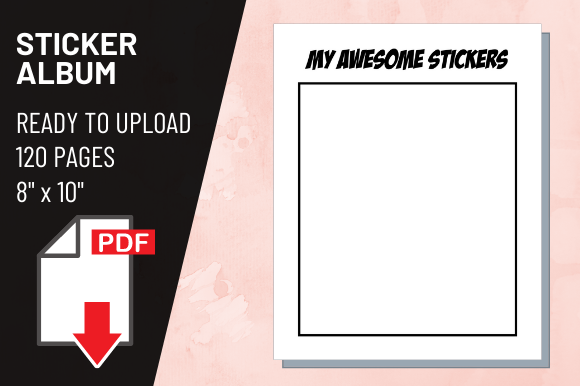
The rise of self-publishing has transformed how creators approach low-content and medium-content books. Among the most popular niches is the sticker collection book, a product that bridges the gap between organizational utility and creative expression. For publishers utilizing Amazon’s print-on-demand services, sourcing or designing a reliable KDP Interior Sticker Album is the foundational step toward creating a viable product. This guide explores the technical specifications, practical applications, and strategic considerations for an 8″ x 10″ sticker album interior featuring 120 pages at 300 DPI with no bleed settings.
Understanding the Technical Specifications
Before uploading any file to KDP, understanding the specific parameters of the interior is crucial for avoiding printing errors and ensuring customer satisfaction. The package described here—an 8″ x 10″ PDF, 120 pages, 300 DPI, no bleed—represents a specific configuration optimized for ease of use and printing safety.
The Significance of 8″ x 10″ Dimensions
While 8.5″ x 11″ is the standard letter size in the United States, the 8″ x 10″ trim size offers distinct advantages for a sticker album KDP interior. This slightly smaller footprint feels more substantial and portable, resembling a premium journal or sketchbook rather than a standard office document. For sticker collectors, this size provides ample surface area for arranging stickers without the excessive whitespace that can make larger formats look sparse. It strikes a balance between display quality and shelf presence, making it an attractive option for both children’s activity books and adult collector albums.
Resolution and Print Quality
The inclusion of a 300 DPI PDF file is non-negotiable for professional publishing. While digital screens display images clearly at 72 or 96 DPI, print requires significantly higher density to avoid pixelation. At 300 DPI, lines remain crisp, and grayscale shading appears smooth rather than grainy. This resolution ensures that when the physical book arrives, the grid lines, decorative borders, and placeholder graphics are sharp. High-resolution files also future-proof your project; should you decide to expand distribution to other platforms like IngramSpark or Barnes & Noble Press later, the file already meets industry standards.
Navigating No-Bleed Interiors
A "no bleed" designation means that all content must stay within a safe margin, typically 0.375 inches from the edge on all sides for this trim size. In a KDP Interior Sticker Album, this is actually a feature rather than a limitation. Sticker collectors generally prefer margins because they prevent adhesive from sticking to the binding or getting trimmed off during manufacturing. A no-blend layout simplifies the design process, as creators do not need to extend background colors or images beyond the trim line. This reduces the risk of white borders appearing due to slight mechanical shifts during the printing and cutting process.
Practical Applications and Target Audiences
A versatile sticker album interior serves multiple demographics. Understanding who will use the book helps in selecting the right layout style and marketing angle.
- Children and Educators: Sticker books are excellent tools for developing fine motor skills, hand-eye coordination, and spatial awareness. An 8″ x 10″ format is manageable for small hands, and 120 pages provide enough longevity to serve as a semester-long reward system or rainy-day activity resource.
- Adult Collectors and Hobbyists: The planner community and journaling enthusiasts often accumulate vinyl, washi, and paper stickers. They require dedicated spaces to catalog their collections or create themed collages. A clean, structured interior appeals to this demographic’s desire for organization.
- Therapeutic Users: Art therapy and mindfulness practices frequently utilize collage and tactile engagement. Sticker albums offer a low-pressure creative outlet where there is no "wrong" way to arrange elements, supporting mental wellness and stress reduction.
- Event Planners and Scrapbookers: Professionals documenting events may use these albums to organize physical memorabilia alongside photos. The consistent page count allows for predictable planning across multiple volumes.
Evaluating Content Structure and Page Count
The 120-page count included in this package is a strategic sweet spot for KDP publishing. Books that are too thin (under 80 pages) can feel insubstantial and may have issues with spine text readability. Conversely, books exceeding 200 pages in the sticker niche can become prohibitively expensive to produce, squeezing royalty margins.
With 120 pages, creators have sufficient volume to include value-added sections without inflating costs. Consider structuring the sticker album KDP interior to include:
- Title and Ownership Pages: Essential for personalization and gift-giving.
- Index or Table of Contents: Allows users to categorize stickers by theme, date, or type.
- Core Collection Pages: The bulk of the 120 pages, featuring grids, blank spaces, or themed backgrounds.
- Notes or Journaling Sections: Interspersed throughout or grouped at the end to encourage mixed-media usage.
This structure maximizes the perceived value of the book while adhering to the economical constraints of print-on-demand production.
Strengths and Considerations for Publishers
Utilizing a pre-formatted KDP Interior Sticker Album streamlines the publishing workflow, but it requires thoughtful evaluation to ensure alignment with your brand and audience expectations.
Advantages of Ready-to-Upload Files
The primary benefit is time efficiency. Designing a 120-page interior from scratch, ensuring consistent margins, and verifying DPI settings can take dozens of hours. A verified PDF package eliminates technical guesswork. Furthermore, because the file is specifically configured for no-bleed 8″ x 10″ printing, the likelihood of rejection during KDP’s automated review process is minimal. This allows publishers to focus on cover design, keyword research, and marketing rather than formatting troubleshooting.
Customization Within Constraints
Even with a pre-made interior, differentiation is possible. Since the file is a high-quality PDF, some creators choose to overlay additional elements using tools like Canva or Affinity Publisher before final upload. However, if using the file as-is, differentiation must come from the cover design, title, subtitle, and backend metadata. The interior serves as a reliable canvas; the exterior sells the specific promise of the book.
Limitations to Acknowledge
Publishers should be aware that no-blend interiors limit full-page immersive designs. If your vision involves edge-to-edge artwork, this specific package is not suitable. Additionally, standard KDP paper is 55# (90 GSM) white or cream. While adequate for most stickers, heavy vinyl or wet adhesives may cause ghosting or warping. Transparency about paper quality in the book description manages customer expectations and reduces negative reviews. The 8″ x 10″ size, while advantageous for many, may not accommodate oversized sticker sheets; verifying common sticker dimensions in your niche is recommended before publication.
Best Practices for Implementation
To maximize the effectiveness of your sticker album KDP interior, follow these practical guidelines during the publishing process:
- Verify Margins Before Upload: Even with a pre-formatted file, always download KDP’s previewer tool. Check the first, middle, and last pages to confirm that no critical elements fall within the gutter or outer safety zones.
- Optimize File Size: While 300 DPI is necessary, uncompressed PDFs can be massive. Use PDF optimization tools to reduce file size without degrading image quality. Faster uploads and processing times improve workflow efficiency.
- Align Cover with Interior: Ensure your cover dimensions account for the exact page count. KDP calculates spine width based on page number and paper type. A 120-page cover template differs from a 100-page template; using the wrong one will result in misalignment.
- Test Print When Possible: If budget allows, order a proof copy. Evaluating the physical interaction between stickers and paper provides insights that digital previews cannot replicate. This step is particularly valuable for assessing how the no-bleed margins function in practice.
Making an Informed Decision
Selecting the right interior is a business decision as much as a creative one. The 8″ x 10″, 120-page, 300 DPI no-bleed KDP Interior Sticker Album represents a balanced solution for publishers seeking reliability, quality, and cost-efficiency. It serves a broad audience ranging from developmental learners to serious collectors, and its technical specifications align with professional printing standards.
However, success depends on matching the product to market demand. Research competing titles in the sticker album niche to identify gaps. Are existing books too large? Too expensive? Lacking structure? If customers express frustration with current options, this specific format may provide the solution they seek. By combining a technically sound interior with thoughtful positioning and honest communication about product capabilities, publishers can create sticker albums that deliver genuine value and sustain long-term sales performance.
Ultimately, the interior is the foundation upon which customer trust is built. When the physical product meets the expectations set by the listing, repeat purchases and positive word-of-mouth follow. Investing time in understanding these specifications ensures that your entry into the sticker album market is built on solid ground.