Optimizing Your KDP Catalog with a Professional Trading Log Book Interior
The low-content publishing market on Amazon has matured significantly, moving past simple lined notebooks into specialized, high-utility tools. For publishers targeting the finance and self-improvement niches, a dedicated KDP Interior Trading Log Book represents one of the most viable opportunities for sustainable sales. Traders and investors are not looking for blank pages; they require structured data entry fields that mirror their daily workflows. When you offer a pre-formatted interior that solves a specific organizational problem, you transition from selling paper to selling a productivity system.
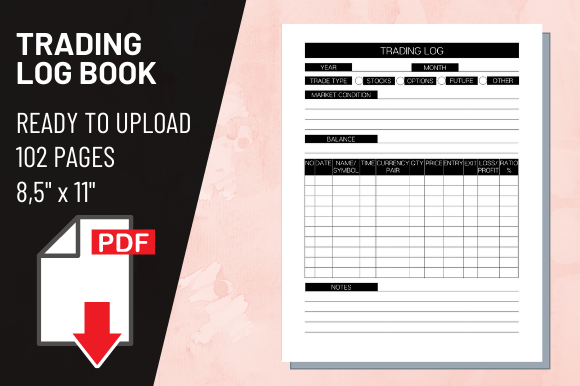
This specific 8.5″ x 11″ trading log book interior is engineered to meet those exacting standards. It provides a comprehensive framework for recording stock, forex, or crypto transactions without requiring the end-user to draw tables or create digital spreadsheets. By understanding the functional design behind this 102-page PDF package, publishers can better position their listings to capture serious traders who value precision over aesthetics.
Critical Technical Specifications for Print Quality
Before discussing content strategy, it is essential to address the technical foundation of any successful KDP product. A trading journal is a reference tool that users may consult daily for years. If the print quality is poor, reviews will reflect that dissatisfaction immediately. This package is delivered as a high-resolution 300 DPI PDF file, which is the industry gold standard for crisp text and sharp table lines. Low-resolution interiors often result in pixelated grid lines or fuzzy text, which makes financial data difficult to read and renders the book unprofessional.
The dimensions are set to the versatile 8.5″ x 11″ format. This size is particularly important for trading logs because it offers ample horizontal space for multiple data columns. Smaller trim sizes like 6x9 often force designers to cramp entry fields, making handwriting illegible or forcing users to use abbreviations. The larger footprint allows for a comfortable writing experience, accommodating everything from entry prices to detailed emotional notes.
Furthermore, this file is configured with no bleed. This is a deliberate design choice for log books. Financial records should remain within the safe zone to ensure that no critical data points are trimmed off during the binding process. A no-bleed layout also simplifies the upload process for publishers, reducing the likelihood of rejection due to margin errors. With 102 pages, the book strikes an optimal balance between substantial utility and manageable spine width, creating a product that feels valuable without being prohibitively expensive to print.
Anatomy of a Functional Stock Trading Log Book KDP Interior
What separates a bestseller from a dud in this niche is the relevance of the column headers. A generic notebook fails because it lacks context. A specialized Stock trading log book KDP interior must anticipate the metrics a trader needs to track to improve performance. While specific layouts vary, high-converting interiors typically include dedicated spaces for the following data points:
- Trade Identification: Date, time, ticker symbol, and asset class.
- Execution Metrics: Entry price, exit price, stop loss, take profit, and position size.
- Performance Analysis: Gross profit/loss, fees/commissions, and net P&L.
- Strategy Tagging: Space to note the specific setup used (e.g., breakout, mean reversion, earnings play).
- Psychological Review: Sections for emotional state, mistakes made, and lessons learned.
The inclusion of a psychological review section is particularly vital. Modern trading education emphasizes mindset as much as technical analysis. By providing structured space for reflection, your interior supports the holistic development of the trader. This added layer of utility increases the perceived value of the book and encourages repeat purchases when the user fills up their current volume.
Designing for Handwritten Utility
Despite the prevalence of digital trading platforms, many professionals still prefer physical journals for post-market review. The act of writing reinforces memory and slows down impulsive decision-making. Therefore, the spacing in this 8.5″ x 11″ interior is calibrated for penmanship. Rows must have sufficient vertical clearance for legible writing, and columns should be wide enough to accommodate varying digit lengths in price entries.
When evaluating this PDF file, notice the contrast and line weight. Tables should be visible but not distracting. Heavy black borders can make a page feel cluttered and reduce the available whitespace for notes. A professional interior uses lighter gray lines for grids while keeping header text bold and clear. This visual hierarchy guides the eye naturally across the row, reducing cognitive load during data entry.
Integrating Physical Logs into Digital Workflows
Publishers often wonder why traders would buy a physical book in an era of algorithmic execution. The answer lies in the separation of execution and analysis. Screens are for executing trades; paper is for reviewing them. This KDP Interior Trading Log Book serves as an analog anchor in a digital workflow. It forces a dedicated review session away from the glowing monitors where emotional triggers reside.
For day traders, the physical log acts as a compliance and accountability tool. Many proprietary trading firms and mentorship programs require students to maintain detailed journals to prove they are following a plan. Your book becomes the standardized form for that verification. For swing traders and long-term investors, the larger 8.5″ x 11″ format allows for chart sketches or pasted printouts alongside the numerical data, creating a multimedia record of their thesis.
Additionally, physical logs provide data security and permanence. Cloud services change, software subscriptions lapse, and file formats become obsolete. A printed PDF interior ensures that a trader’s historical performance data remains accessible regardless of technological shifts. This longevity is a key selling point to highlight in your book description.
Strategic Considerations for Publishers
When adding this 102-page package to your catalog, consider how it fits into your broader brand strategy. Trading journals are evergreen, but they also have seasonal peaks aligned with tax seasons, new fiscal years, and periods of high market volatility. Having a ready-to-upload 300 DPI file allows you to capitalize on these trends quickly without spending weeks on design.
It is also important to manage customer expectations through accurate metadata. Since this is a no-bleed interior, ensure your cover design accounts for the safe margins. The cover should visually communicate the internal structure; showing a mockup of the interior pages on the back cover or in A+ Content significantly boosts conversion rates. Buyers need to verify that the columns match their specific trading style before purchasing.
Finally, recognize that this interior is a foundation. While the PDF is ready to upload, successful publishers often differentiate by adding unique value propositions in their listing copy. Explain why the specific columns were chosen. Describe the benefits of the 8.5″ x 11″ size for desk use versus travel. Connect the features of the Stock trading log book KDP interior directly to the user's goal of becoming more profitable. When you bridge the gap between technical specifications and user outcomes, you create a product listing that resonates with human needs rather than just search algorithms.
Ensuring Long-Term Relevance
Markets evolve, but the core principles of record-keeping remain constant. This interior focuses on universal metrics rather than platform-specific jargon, ensuring it remains relevant whether the user trades equities, options, futures, or cryptocurrencies. The clean, minimalist design avoids trendy graphics that might date the book within a year. Instead, it prioritizes function and clarity, qualities that never go out of style in financial documentation.
By selecting a high-quality, professionally formatted interior, you protect your publishing account from negative feedback related to usability issues. The 300 DPI resolution and precise 8.5″ x 11″ dimensions demonstrate a commitment to quality that discerning customers appreciate. In a marketplace saturated with low-effort uploads, a meticulously crafted trading log book stands out as a serious tool for serious practitioners.