Evaluating a Weekly Pregnancy Journal Interior for KDP and Personal Use
Pregnancy is often described as a transformative journey, but the day-to-day reality involves a complex mix of physical changes, emotional shifts, and logistical planning. For many expectant mothers, documenting this period serves as both a mindfulness practice and a practical record. When selecting or creating a resource to capture these moments, the specific design of the interior matters significantly. A dedicated Weekly Pregnancy Journal Interior offers a structured yet flexible framework that differs markedly from generic notebooks or standard digital tracking apps. Understanding the nuances of this specific format helps in determining whether it aligns with personal documentation goals or self-publishing objectives.
Distinguishing Features of Hand-Illustrated Interiors
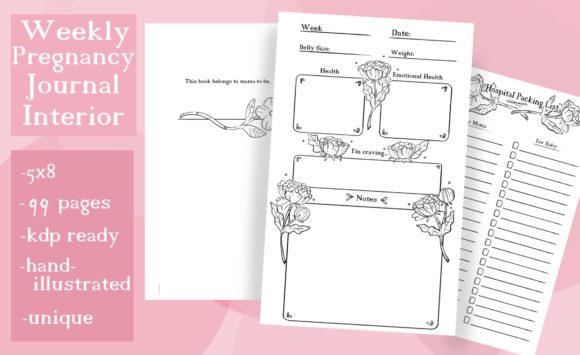
In a market saturated with digital assets, the distinction between clip art and original illustration is a primary decision factor. Many low-content book interiors rely on stock vectors that, while functional, can feel impersonal or repetitive. The Weekly Pregnancy Journal Interior discussed here utilizes completely unique, hand-illustrated designs without reliance on clip art. This distinction impacts both the user experience and the commercial viability of the final product.
For the end-user, hand-drawn elements often convey a sense of warmth and authenticity that aligns with the intimate nature of pregnancy journaling. From a publishing perspective, original artwork mitigates the risk of duplicate content issues on platforms like Amazon KDP. When evaluating this interior against others, consider the aesthetic cohesion. Stock assets often look pasted onto a page, whereas bespoke illustrations are typically integrated into the layout, creating a seamless visual flow that enhances the perceived value of the journal.
Structural Breakdown and Functional Utility
A well-designed journal interior balances guided prompts with open space. This specific 99-page layout is engineered for a 5×8 paperback trim size, which is a critical ergonomic consideration. Unlike larger 8.5×11 formats that can be cumbersome to carry to prenatal appointments, the 5×8 size fits easily into hospital bags and daily purses. The structure is divided into three distinct functional zones that address different phases of the pregnancy experience.
Logistical Preparation Pages
The inclusion of two dedicated hospital packing list pages at the front of the journal addresses an immediate practical need. While many journals focus solely on sentiment, this feature acknowledges the administrative and logistical weight of preparing for birth. Compared to generic journals that might offer a single checklist or none at all, having designated space allows for categorization (e.g., items for mother, baby, partner, and postpartum care). This turns the journal into a dual-purpose tool: a sentimental keepsake and an active planning organizer.
Weekly Check-In Framework
The core of this Weekly Pregnancy Journal Interior consists of forty weekly check-in pages. This quantity covers the full term of a typical pregnancy, including early weeks and potential post-due-date periods. The prompts go beyond basic dates, incorporating fields for emotional health, belly measurements, and cravings. This holistic approach distinguishes it from medical-only trackers that focus exclusively on weight and blood pressure. By including emotional health, the journal validates the psychological aspect of gestation, making it suitable for users who view journaling as a mental health support tool rather than just a biological log.
Open Note-Taking Capacity
Fifty pages of lined paper at the end provide necessary overflow space. Rigidly structured journals often fail because they do not account for the unpredictability of pregnancy; some weeks require extensive reflection, while others are uneventful. This substantial note section offers flexibility that purely prompted journals lack. It also serves as a repository for appointment notes, ultrasound results, or birth plan drafts, consolidating information that might otherwise be scattered across loose papers or phone notes.
Comparing Formats: Physical Journals vs. Digital Alternatives
When deciding if this interior is the right fit, it is helpful to compare it against digital pregnancy trackers and blank notebooks. Each format serves different user needs and preferences.
- Versus Digital Apps: Apps excel at data visualization and automated reminders. However, they lack the tactile engagement of writing by hand, which has been shown to improve memory retention and emotional processing. A physical Weekly Pregnancy Journal Interior provides a screen-free sanctuary, reducing digital fatigue during a time when users are already overwhelmed by online information. The trade-off is the lack of searchability and cloud backup.
- Versus Blank Notebooks: A blank notebook offers total freedom but requires the user to create their own structure every week. This can lead to inconsistency or abandonment of the habit when fatigue sets in. The pre-formatted check-in pages reduce the cognitive load required to journal, making consistency easier to maintain. The trade-off is less creative freedom in layout design compared to a bullet journal approach.
- Versus Premium Hardbound Journals: High-end retail journals often feature superior binding and paper quality but come at a premium price point ($30–$50). A KDP-printed version of this interior offers a cost-effective alternative ($10–$15) with identical content structure. The trade-off involves paper thickness and cover durability, which are generally lower in print-on-demand softcovers compared to traditional publishing.
Technical Specifications for Publishers and Creators
For those evaluating this asset for self-publishing or customization, technical compatibility is paramount. This package includes a KDP-ready PDF formatted for 5×8 full-bleed printing. Full-bleed capability is essential for illustrated interiors where art extends to the edge of the page; non-bleed files would result in unwanted white borders that detract from the professional appearance.
The inclusion of an editable Word document and transparent PNG images adds significant utility. Static PDFs limit adaptability; if a publisher wishes to adjust font sizes, modify prompts for a specific niche (e.g., twin pregnancies or adoption), or rebrand the cover, source files are necessary. Transparent PNGs allow designers to repurpose the hand-illustrated elements for marketing materials, social media promotion, or companion products without needing to recreate assets. This modularity makes the Weekly Pregnancy Journal Interior a versatile foundation rather than a rigid template.
Assessing Fit: When to Choose This Interior
No single journal format suits every expectant parent or publisher. Determining whether this specific Weekly Pregnancy Journal Interior is appropriate requires honest assessment of priorities.
This interior is likely a strong fit if:
- You value originality and want to avoid the "cookie-cutter" aesthetic common in low-content books.
- You prefer a compact 5×8 size over larger formats for portability.
- You seek a balance between structured prompts and free-writing space.
- You are a KDP publisher looking for commercially safe, original artwork with editable source files.
- You want a resource that integrates logistical planning with emotional reflection.
Alternative options may be better if:
- You require extensive medical tracking fields (contraction timers, kick counts, medication logs) that exceed the scope of general wellness prompts.
- You prefer a minimalist, text-only aesthetic without illustrations.
- You need a larger writing area due to handwriting size or extensive journaling habits.
- You are seeking a digital-first solution with integration to healthcare portals or sharing features.
- You require premium archival-quality paper and binding that print-on-demand cannot provide.
Making an Informed Decision
Selecting a pregnancy journal—or an interior to publish—is ultimately about matching form to function. The Weekly Pregnancy Journal Interior described here occupies a specific niche: it bridges the gap between utilitarian planning and sentimental recording, wrapped in original artistic presentation. Its 99-page count, balanced prompt structure, and inclusion of editable assets make it a pragmatic choice for both personal use and commercial adaptation.
However, users should weigh the benefits of its curated structure against their individual needs for customization or medical specificity. By understanding the distinctions between hand-illustrated and stock designs, as well as the functional differences between this format and digital or blank alternatives, expectant mothers and publishers can select a resource that genuinely supports the documentation of this significant life chapter. The goal is not merely to fill pages, but to create a meaningful record that respects both the joy and the complexity of the pregnancy experience.