This Book Belongs to: 10 KDP Interior Cover Pages
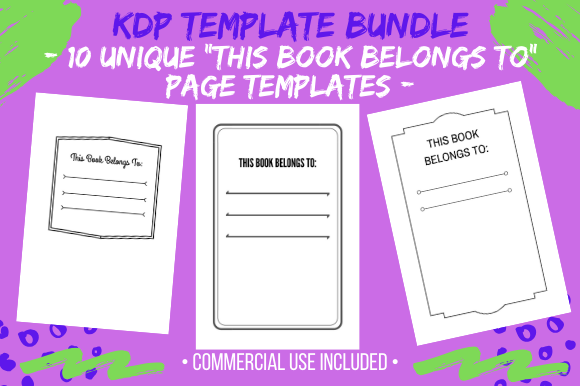
Creating a polished interior for low-content and no-content books on Amazon KDP often comes down to the smallest details. While the exterior cover grabs attention, the first page a reader sees sets the tone for their entire experience. This is where "This Book Belongs to" 10 Cover Pages becomes an essential asset for self-publishers. This digital resource provides ten distinct interior title page designs specifically formatted for 6×9 inch books with no bleed. Rather than spending hours designing a simple ownership page from scratch, creators can instantly elevate their book’s perceived value with professional, ready-to-use layouts.
The primary appeal of this collection lies in its balance of convenience and quality. Each of the ten PNG files offers a unique aesthetic, ranging from minimalist lines to more decorative frames suitable for journals, planners, or coloring books. Because these are designed as no-bleed interiors, they fit perfectly within standard KDP margins without requiring complex trimming adjustments. For entrepreneurs and hobbyists managing multiple titles, having a pre-made library of high-quality interior pages streamlines the publishing workflow significantly. It removes the friction of design while ensuring that every book starts with a clean, intentional look.
Elevating Low-Content Books with Professional Interiors
In the competitive landscape of KDP publishing, differentiation is key. Many beginners make the mistake of leaving the first page blank or using a generic, pixelated template found online. Using dedicated "This Book Belongs to" 10 Cover Pages signals to the customer that the creator has paid attention to the user experience. A well-designed ownership page transforms a stack of paper into a cohesive product. It creates a psychological boundary between the outside world and the personal space of the journal or planner, encouraging the user to engage with the content immediately.
These templates serve a practical function beyond aesthetics. They provide a designated space for names, dates, or contact information, which is particularly valuable for educational workbooks, travel journals, or classroom resources. When a teacher purchases a set of notebooks for students, or a traveler buys a diary for an upcoming trip, that initial page serves as both identification and an invitation. By utilizing these varied styles, publishers can match the interior vibe to the specific niche of their book. A floral frame might suit a gratitude journal, while a bold, geometric layout works better for a business planner or fitness tracker.
Practical Applications Across Different Niches
Versatility is a major strength of this digital pack. The ten included styles allow creators to maintain brand consistency across a series or to experiment with different looks for unrelated titles. Consider the following realistic use cases where these interior covers add immediate value:
- Personal Journals and Diaries: Establishing a sense of privacy and ownership is crucial for emotional writing. A beautiful title page validates the user's intent to document their thoughts.
- Educational Workbooks: Teachers and homeschoolers can use these pages to help students organize materials. The clear labeling area reduces lost items and adds a touch of professionalism to custom curriculum resources.
- Coloring and Activity Books: These books often lack structure. Adding a styled ownership page gives the activity book a proper beginning, making it feel like a complete publication rather than loose sheets.
- Business Planners and Logs: For professionals tracking mileage, expenses, or client meetings, a clean and structured first page reinforces the utility and organizational purpose of the tool.
- Gift Books: When creating books intended as gifts, such as memory keepers or recipe collections, an elegant "This Book Belongs To" page acts as a built-in gift tag, eliminating the need for separate stationery.
Customization Strategies for Long-Term Success
While the convenience of ready-made PNG files is undeniable, successful KDP publishing requires a proactive approach to content originality. It is highly recommended to treat these templates as a foundation rather than a final product. Amazon’s algorithms prioritize unique content, and relying solely on stock assets without modification can sometimes lead to duplicate content flags. To protect your account and ensure your book stands out, you should aim to make each template uniquely yours.
Before you begin editing, always create a duplicate copy of the original files. This preserves the pristine master version for future projects while giving you the freedom to alter the working copy extensively. Simple modifications can significantly change the fingerprint of the file. You might combine one of the base designs with proprietary clip art, add a motivational quote relevant to your niche, or incorporate a small logo. Rearranging elements, changing fonts, or adjusting colors are also effective ways to customize the page. Some creators even use these ownership pages as part of a larger front matter section, adding a table of contents or a "How to Use This Book" guide directly after the title page to increase the overall page count and value proposition.
Technical Specifications and Best Practices
Understanding the technical parameters of these files ensures a smooth upload process. The 6×9 inch dimension is the industry standard for trade paperbacks, making these templates compatible with a vast array of existing projects. The no-bleed specification means all critical design elements are safely contained within the printable area, preventing accidental cropping during the manufacturing process. This is particularly helpful for beginners who may not yet be comfortable setting up full-bleed PDFs.
When integrating these PNGs into your manuscript, pay attention to resolution and color profile. Although the files are ready to use, verifying that they remain crisp at print size is a good habit. Since KDP prints in black and white for most low-content interiors, ensure that any color elements in the PNG convert gracefully to grayscale. Testing your interior with a printed proof or using KDP’s previewer tool is always advisable before hitting publish. This step confirms that the "This Book Belongs To" page aligns correctly with the rest of your content and that the margins provide adequate white space for a comfortable reading experience.
Maximizing Value Through Strategic Implementation
Owning a set of high-quality interior templates is an investment in efficiency and quality control. For freelancers and small business owners producing books for clients, these assets reduce turnaround time without sacrificing design standards. For individual creators, they free up mental energy to focus on marketing, keyword research, and cover design—areas that directly drive sales. The ability to quickly generate a professional interior allows for faster testing of new niches and concepts.
Ultimately, the goal is to create a product that resonates with human readers. While algorithms and keywords get your book discovered, the interior experience generates reviews and repeat customers. A thoughtful "This Book Belongs To" page demonstrates respect for the buyer. It shows that you understand their desire for organization, beauty, and personal connection. By leveraging these ten distinct styles and applying your own creative touch, you build a catalog of books that feels authentic and professionally crafted. Remember to view these templates as starting points for your creativity, ensuring that every book you publish remains a unique reflection of your brand and vision.